Most conversations about networking progress focus on raw speed — higher bandwidth, lower latency, faster Wi-Fi generations. But there is a quieter revolution happening at the protocol level, one that is gradually moving from industrial settings into enterprise data centers, broadcast studios, and even ambitious home lab setups. It is called Time-Sensitive Networking, or TSN, and it is reshaping what we expect from Ethernet beyond simply moving data fast.
At its core, TSN is a set of IEEE 802.1 standards designed to guarantee that specific network traffic arrives at a precisely defined time — not just quickly, but predictably. Standard Ethernet has always been a best-effort system. Packets travel fast on average, but there is no hard promise about when any individual packet lands. For streaming a video or downloading a file, that is perfectly acceptable. For controlling a robotic arm on a production line, or synchronizing dozens of audio channels in a live broadcast, even a few microseconds of jitter can cause real problems. TSN solves this by introducing traffic scheduling, stream reservation, and time synchronization across the network fabric.
For years, TSN lived almost exclusively in industrial automation. Manufacturers adopted it to replace fragile, proprietary fieldbus systems with a single converged Ethernet infrastructure that could carry both control signals and ordinary data traffic simultaneously without either interfering with the other. That convergence is the big economic argument: one cable plant, one switch infrastructure, two very different types of traffic coexisting safely.
What makes the current moment interesting is the expansion of that logic into adjacent industries. Professional audio-visual workflows have embraced TSN-adjacent protocols like AES67 and SMPTE ST 2110 for years, and the underlying synchronization mechanisms are closely related. Automotive Ethernet, powering the in-vehicle networks of next-generation cars, leans heavily on TSN to coordinate sensors, cameras, and safety systems. And as data centers push toward disaggregated computing — where storage, memory, and processing are spread across separate nodes and tied together by the network — the case for deterministic, scheduled traffic is becoming harder to ignore.
For IT professionals, the practical takeaway is that TSN awareness is no longer a niche specialism. As organizations invest in smart manufacturing, edge computing, or high-density media production, network architects increasingly need to understand traffic shaping, IEEE 1588 Precision Time Protocol (PTP) synchronization, and switch hardware that actually supports TSN features rather than simply advertising them.
ShazConnect, ShazNation's networking division, has consistently emphasized that future-ready infrastructure means thinking beyond bandwidth — and TSN is exactly the kind of foundational shift that rewards planning ahead rather than retrofitting under pressure.
The factory floor was just the beginning. As deterministic networking principles spread upward into the enterprise and outward into new device categories, the question for IT teams is not whether TSN will become relevant to their work — it is whether they will be ready when it does.
IT & Networking
The Quiet Takeover of Time-Sensitive Networking — And Why It Matters Beyond the Factory Floor
October 15, 2026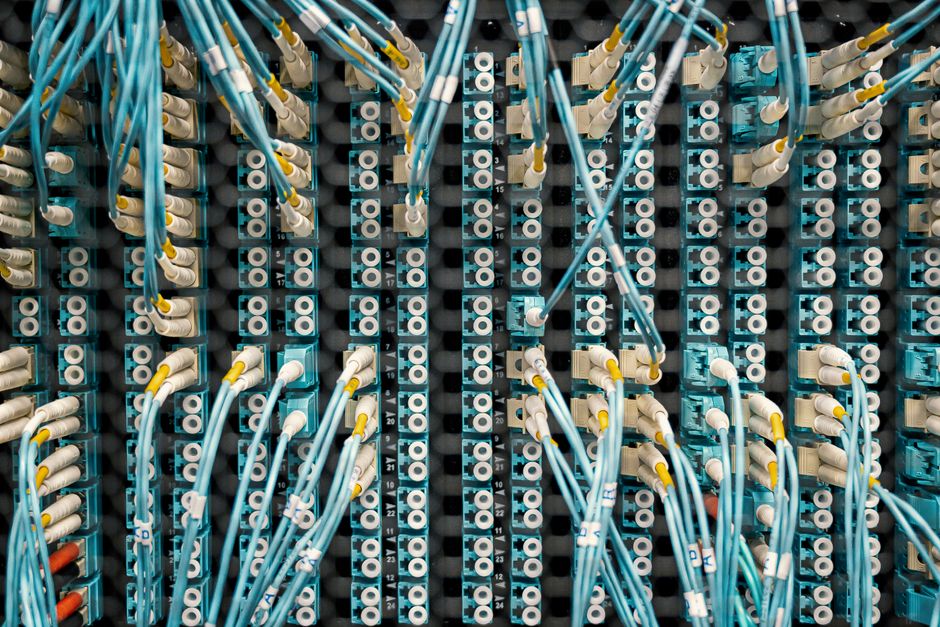
Related in IT & Networking
Oct 14, 2026
Managed vs. Unmanaged vs. Smart Switches: Which One Does Your Network Actually Need?
If you've ever gone shopping for a network switch and found yourself staring at three different cate…
Read More →
Oct 13, 2026
How to Secure Your Home Router Before It Becomes the Weakest Link in Your Network: A Practical Checklist
Most people set up their home router once, tuck it behind the TV, and never think about it again. Th…
Read More →
Oct 10, 2026
5 Myths About Ethernet Cables That Are Costing You Performance
You have probably heard it before: just plug in an Ethernet cable and your network problems disappea…
Read More →